Bamboo-Derived Socks vs Cotton: Which Feels Better for Everyday Wear?
KikiToes develops everyday socks around softness, breathability and practical comfort for Indian conditions. You can learn more about the brand and its approach in our best socks brand in India overview, or explore the full range of bamboo socks for men.
The real question, however, is not whether one fabric is always better than another. It is how the material, knit, fit and construction work together for your routine.
If your socks regularly feel damp or uncomfortable by evening, it may be worth looking beyond conventional cotton and comparing the complete fabric blend and construction.
What Are Bamboo-Derived Socks?
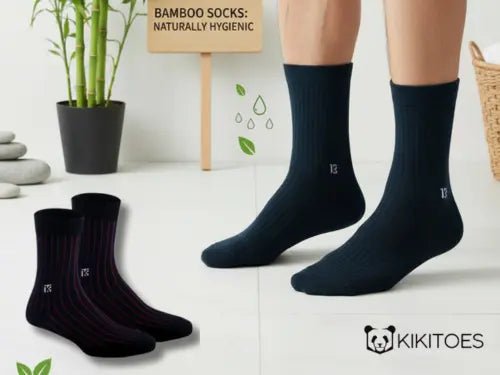
Most soft socks described as bamboo are made using viscose derived from bamboo pulp. This regenerated cellulose fibre is spun into yarn and usually blended with stretch and supporting fibres to help the finished sock retain its shape.
The exact composition can vary between products, so the material label is more informative than broad descriptions such as “pure bamboo.” Fabric is also only one part of the experience. Cuff pressure, toe construction, cushioning, ventilation and heel shape all influence how a sock feels inside a shoe.
Bamboo-derived viscose is commonly chosen for its smooth, soft feel. When combined with a breathable knit and a secure fit, it can be comfortable for office wear, travel and everyday use.
Why Does Sock Fabric Matter?
Socks remain in contact with your skin for hours. During that time, they need to manage moisture, limit friction and stay in position without feeling excessively tight.
Cotton is familiar, widely available and comfortable in many situations. It absorbs moisture well, but a thick or densely knitted cotton pair may remain damp when worn inside shoes with limited ventilation. Bamboo-derived viscose also absorbs moisture, while the overall blend and knit determine how quickly that moisture spreads and dries.
This means material names alone do not tell the complete story. A lightweight, well-ventilated cotton sock can outperform a poorly constructed bamboo-derived pair. Always compare the complete product rather than relying on one headline claim.
Practical Benefits for Everyday Wear
1. A Soft, Smooth Feel
Bamboo-derived viscose generally has a smooth surface and soft drape. This can feel comfortable during long hours in closed shoes, particularly when the toe area is smooth and the sock fits without bunching.
People with sensitive skin may prefer softer fabric, but fit remains equally important. A rough seam or tight cuff can still create discomfort regardless of the main material.
2. Moisture Management
Feet naturally release moisture throughout the day. A good sock should move that moisture away from concentrated areas and allow it to spread through the fabric.
Absorbency does not automatically mean that a sock will stay dry. Fabric thickness, ventilation panels, the supporting fibre blend and shoe breathability all affect the final result. For hot or humid conditions, look for moisture-management features combined with a breathable knit.
3. Support for Odour Management
Foot odour usually develops when moisture remains trapped and interacts with bacteria on the skin and inside footwear. No sock can promise completely odour-free feet, but moisture management and ventilation can help reduce the damp environment associated with unwanted smell.
Bamboo socks from KikiToes also use HypaFresh™ freshness technology in selected styles to support odour management during extended wear. Clean socks, regular washing and allowing shoes to dry remain essential parts of foot and footwear hygiene.
4. Breathable Comfort
Breathability comes from construction as much as fibre. A lightweight knit or mesh zone allows more airflow than a thick, tightly knitted design.
For daily commuting or warm-weather wear, look for a pair that balances coverage with ventilation. Sports styles may require dedicated airflow zones, while office socks may need a slimmer construction that fits comfortably inside formal shoes.
5. Shape and Durability
Durability depends on the complete fabric blend, knitting quality and reinforcement—not bamboo or cotton alone. Stretch fibres help socks return to their original shape, while reinforced heels and toes can support areas exposed to repeated friction.
Washing and drying also matter. Gentle care helps preserve softness and elasticity, while high heat and harsh bleach can shorten the usable life of many socks.
Cotton vs Bamboo-Derived Socks: Quick Comparison
| Feature | Conventional cotton socks | KikiToes bamboo-derived socks |
|---|---|---|
| Feel | Familiar and comfortable; softness varies by yarn | Designed for a smooth, soft feel |
| Moisture experience | Absorbs moisture but may remain damp in a dense knit | Designed to support moisture management |
| Odour management | Depends on moisture, construction and hygiene | Selected styles include HypaFresh™ technology |
| Breathability | Varies with thickness and knit | Breathable construction; features vary by style |
| Shape retention | Depends on the supporting fibre blend | Supported by stretch fibres and structured knitting |
| Best use | General everyday wear | Office, travel, casual wear and selected sports use |
The table is a practical guide, not a guarantee that every pair made with one material will perform identically. Always check the product specifications and choose a construction suited to your activity.
Upgrade to Kikitoes Bamboo Socks – Explore Ankle & Crew Length Options
Which Option Suits Your Routine?
For office and formal wear, choose a crew-length pair with a comfortable stay-up cuff, a smooth toe area and enough breathability for extended use.
For gym sessions, walking or active days, look for sports construction with cushioning, ventilation and a secure heel. A regular lifestyle sock may feel soft, but it may not provide the support expected during exercise.
For sensitive feet, consider a non-binding cuff, smooth or seamless toe construction and gentle cushioning. Anyone managing diabetes, reduced sensation or another foot condition should follow advice from a qualified healthcare professional rather than treating socks as medical care.
Why This Fabric Works Well for Indian Lifestyles
Indian routines often combine warm outdoor conditions with public transport, long hours in air-conditioned offices and extended time in closed shoes. A useful everyday sock needs to remain comfortable across these changing environments.
Bamboo-derived fabric can provide a smooth feel, while breathable knitting and moisture-management features help during humid weather and long commutes. The correct length and cushioning then make the pair suitable for a particular activity.
For the best experience, wear a clean pair each day, change after sweaty workouts and allow shoes to dry fully before wearing them again.
How to Care for Your Socks
-
Follow the instructions on the product label.
-
Wash with similar colours using a mild detergent.
-
Choose a gentle cycle with cold or mild-temperature water.
-
Avoid bleach and harsh cleaning products.
-
Air-dry where possible.
-
Avoid ironing or exposing elastic areas to excessive heat.
Correct care helps preserve the fit, stretch and softness of both cotton and bamboo-derived blends.
Final Thoughts
Choosing between cotton and bamboo-derived socks should not be reduced to one being universally good and the other bad. Cotton remains practical and comfortable for many people. Bamboo-derived viscose offers a smooth feel and can work especially well when paired with breathable construction, moisture management and an activity-appropriate fit.
Consider your shoes, climate and daily routine. A slim crew sock may be right for the office, while a ventilated and cushioned design will usually be more suitable for exercise. The best pair is ultimately the one that fits properly and remains comfortable during the hours you actually wear it.