How to Choose Men’s Socks: A Complete Buying Guide
Socks might be a small part of your outfit, but the right pair can make a surprisingly big difference. From keeping your feet comfortable during a long workday to helping you stay dry during a workout, socks do much more than simply cover your feet.
However, choosing the right pair isn't always as simple as picking a color or buying the cheapest multipack. The ideal socks depend on where you are wearing them, the weather, your footwear, your activity level, and how they fit.
For example, the socks that work well with formal trousers may not be the best choice for running. Similarly, a thick winter sock can feel uncomfortable in India's hot and humid weather.
So, how do you choose the right pair?
This guide walks you through the most important factors to consider, including fabric, length, fit, comfort, activity, weather, style, and durability, so you can make a better choice every time you shop for men's socks.
Quick Answer: How Do You Choose the Right Men's Socks?
Choose men's socks based on their purpose, fabric, length, fit, cushioning, breathability, and the weather. For formal outfits, choose longer socks that stay in place and complement your trousers. For running or gym sessions, prioritize moisture management, cushioning, support, and a secure fit. For everyday use, look for soft, breathable materials that remain comfortable throughout the day.
The most important rule is simple: choose your socks for the way you actually use them.
1. Start by Considering Where You’ll Wear Them
Before buying a new pair, think about your daily routine.
Are you looking for socks for the office? Do you spend several hours walking or standing? Are you buying them for running, gym sessions, travel, or simply everyday use?
Each situation puts different demands on your feet.
For everyday wear
For casual, everyday use, comfort should be your priority. Look for socks that feel soft, allow your feet to breathe, and stay comfortably in place throughout the day.
For example, a breathable pair can be especially useful if you live in a warm or humid city where your feet tend to feel sweaty.
For office and formal wear
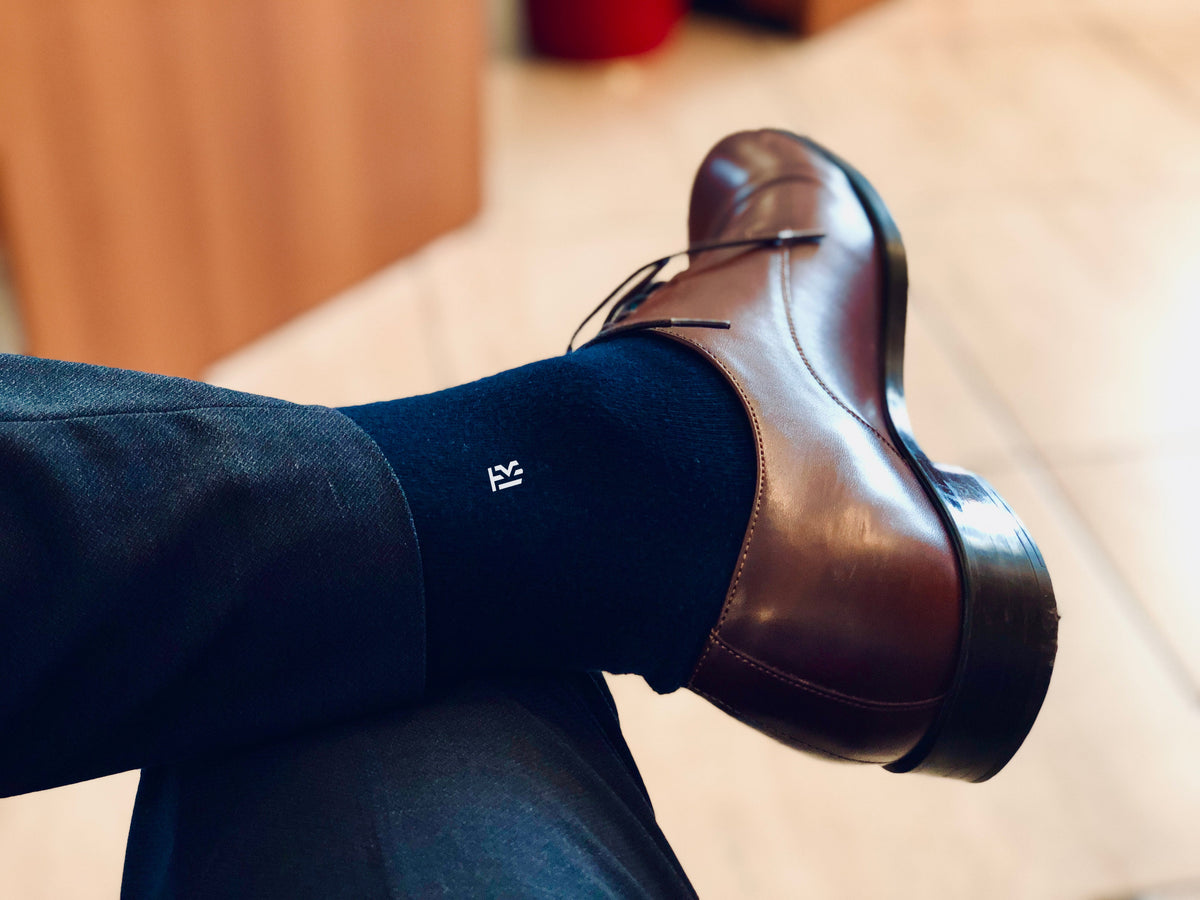
Office socks should combine comfort with a clean, polished appearance. Longer socks are generally a better choice with formal trousers because they help prevent exposed skin from showing when you sit down or cross your legs.
Classic shades such as black, navy, charcoal, and dark grey are easy to coordinate with formal outfits.
If you're interested in more outfit-specific advice, you can also read our guide on sock mistakes men still make with formal outfits.
For running and workouts
Active feet need something different. During running or exercise, your socks should help manage moisture while staying securely in place.
Look for features such as:
- Moisture-managing fabric
- Breathable construction
- Comfortable cushioning
- A secure fit
- Reduced friction
- Suitable arch support
The goal isn't simply to find a “sports sock.” Instead, choose a pair designed around the activity you actually perform.
2. Choose the Right Sock Fabric
Fabric has a major influence on how socks feel throughout the day. Different materials offer different combinations of softness, breathability, moisture management, warmth, and durability.
Rather than looking for one universally “best” fabric, consider what suits your routine.
Cotton
Cotton is soft, familiar, and widely used in everyday socks. It can be comfortable for casual use, but it absorbs moisture and can remain damp during prolonged activity.
As a result, cotton may not always be the most comfortable option for intense workouts or very humid conditions.
Bamboo-based fabrics
Bamboo-based socks are valued for their soft feel and breathability. They can be a comfortable option for everyday wear, particularly when you want a lightweight sock that feels pleasant against the skin.
For men looking for a soft and breathable everyday option, bamboo socks for men can be worth considering.
However, remember that the material alone doesn't determine how well a sock performs. Construction, thickness, cushioning, stretch, and overall fit matter too.
Synthetic performance fabrics
Materials such as polyester and nylon are commonly used in performance socks. They can offer durability, moisture management, and quicker drying, making them popular for running and other active pursuits.
Wool and wool blends
Wool is particularly useful in colder conditions because it provides warmth while still allowing moisture vapour to move away from the skin.
For most people living in warmer climates, however, lightweight and breathable options are often more practical for everyday wear.
3. Pick the Right Sock Length
Sock length affects both comfort and appearance. The right option depends largely on your footwear, outfit, and activity.
No-show socks
No-show socks are designed to stay mostly hidden inside low-cut footwear. They work well with casual shoes and certain sneakers when you want a minimal-sock appearance.
Ankle socks
Men's ankle socks are a practical choice for sneakers, casual outfits, gym sessions, and many warm-weather activities.
Because they sit around the ankle rather than extending up the calf, they offer a lower profile and can feel comfortable with everyday athletic footwear.
Crew socks
Crew socks typically extend higher up the leg than ankle socks, making them one of the most versatile choices for everyday dressing.
They can work with jeans, chinos, casual trousers, sneakers, and many other types of footwear. They are also useful when you want more coverage without choosing a formal dress sock.
Dress socks
Dress socks are generally longer and designed to work with formal trousers and dress shoes. Their extra length helps keep the lower leg covered when sitting or moving.
For formal outfits, choose colors that coordinate with your trousers rather than treating socks as an afterthought.
4. Make Sure the Fit Is Right
Even a high-quality sock won't feel comfortable if it doesn't fit properly.
A good sock should feel secure without squeezing your foot or leg. At the same time, it shouldn't be so loose that it constantly slides down or bunches inside your shoe.
When trying a pair, pay attention to four areas:
Heel
The heel should sit naturally in the heel section of the sock. If it constantly moves toward the ankle or under the foot, the fit may not be right.
Toe area
Your toes should have enough room to move naturally. Excess fabric, however, can bunch up and create friction inside your shoe.
Cuff
The cuff should hold the sock comfortably in place without feeling excessively tight or leaving deep marks on your skin.
Overall fit
The best-fitting socks are often the ones you stop noticing after putting them on. They should stay in position without requiring constant adjustment.
5. Match Your Socks to Your Outfit
Socks can either complete an outfit or quietly disrupt it.
For formal clothing, matching your socks with your trousers is usually a reliable approach. Black, navy, charcoal, and other darker shades work well with many professional outfits.
For casual clothing, you have more freedom.
You can experiment with:
- Solid colors
- Stripes
- Polka dots
- Subtle patterns
- Brighter shades
The key is balance. If your outfit already has several bold elements, a simpler sock can create a cleaner appearance.
On the other hand, a patterned pair can add personality to an otherwise understated outfit.
For casual footwear, ankle socks can work particularly well with sneakers, jeans, shorts, and joggers.
6. Consider India's Weather When Choosing Socks
Weather is easy to overlook, but it can significantly affect sock comfort.
In many parts of India, warm temperatures and humidity can make feet feel hot and sweaty. In these conditions, lightweight, breathable socks can be more comfortable than heavy materials.
For hot and humid weather
Look for:
- Breathable construction
- Lightweight materials
- Moisture management
- Comfortable ventilation
- A fit that doesn't feel restrictive
For everyday use in warmer weather, breathable socks can help you stay more comfortable throughout the day.
For cooler weather
When temperatures drop, thicker or wool-blended socks can provide additional warmth.
If you're spending time outdoors during winter, you may also prefer socks with additional cushioning for walking or extended periods on your feet.
Ultimately, your location and daily routine should influence your choice. A person living in Mumbai may have very different sock requirements from someone dealing with a colder winter in Delhi, Shimla, or another cooler region.
7. Think About Cushioning and Support
Not every pair of socks needs heavy cushioning.
For everyday office wear, a lightweight construction may be more comfortable, particularly when worn with fitted formal shoes.
For running, hiking, long walks, or other activities where your feet experience more impact, additional cushioning around areas such as the heel and toe can improve comfort.
If you're on your feet for several hours a day, also look for a sock that provides a secure fit around the foot without creating unnecessary pressure.
The right amount of cushioning depends on your footwear and activity. Too little may leave your feet feeling uncomfortable, while too much can make a shoe feel tighter than expected.
8. Consider Moisture and Foot Comfort
Your feet naturally produce sweat, and wearing closed shoes for long periods can make moisture more noticeable.
This is why moisture management matters when choosing socks.
Socks that help move moisture away from the skin can make your feet feel more comfortable, particularly during exercise, travel, long workdays, or warm weather.
It's also important to change socks regularly and allow shoes to dry properly between uses. Good sock habits and good footwear habits work together.
If you're interested in keeping socks fresh for longer, you can also read how often you should replace your socks.
9. Don't Ignore Sock Construction
Two socks can contain similar materials but feel completely different because of how they are made.
When shopping, look beyond the fabric label and consider the construction.
Features worth checking include:
- Reinforced heel and toe areas
- Smooth or comfortable toe seams
- Secure cuffs
- Breathable panels
- Appropriate stretch
- Cushioning where needed
- Overall fabric thickness
For sports socks, ventilation zones and cushioning can be especially useful. For formal socks, a smoother and lighter construction may be preferable.
In other words, fabric tells you what a sock is made from, while construction tells you how it may perform.
10. Choose Quality Over Quantity
Buying a large pack of inexpensive socks can seem like a great deal, but price shouldn't be your only consideration.
Low-quality socks may lose their shape, develop thinning areas, fade, or become uncomfortable after repeated washing.
Instead, consider the overall value.
A well-made pair that remains comfortable and retains its shape over time can be a better purchase than repeatedly replacing cheaper pairs.
Before buying, check the material composition, construction, size information, washing instructions, and customer feedback.
11. Check the Size Before Ordering Online
When buying socks online, don't assume that every brand uses identical sizing.
A medium from one brand may fit differently from a medium elsewhere.
Before placing an order, check:
- The brand's size chart
- Recommended foot size
- Sock length
- Stretch
- Customer reviews
- Return or exchange information
Reviews can also provide useful clues about how the socks feel after extended wear and repeated washing.
Rather than looking only for comments such as “good socks,” look for detailed feedback about fit, softness, durability, breathability, and whether the socks stay in place.
12. Build a Sock Collection Around Your Lifestyle
You don't necessarily need dozens of different styles. Instead, build a practical collection around the situations you encounter most often.
For example, a versatile collection might include:
Everyday socks:
Comfortable, breathable pairs for regular use.
Ankle socks:
Useful for sneakers, casual outfits, gym sessions, and warmer days.
Crew socks:
A versatile option for casual and smart-casual outfits.
Formal socks:
Longer, understated styles for office wear and formal occasions.
Sports or running socks:
Designed with activity, moisture management, cushioning, and secure fit in mind.
Having a few suitable options makes it easier to choose the right pair instead of wearing the same style for every occasion.
A Simple Men's Socks Buying Checklist
Before purchasing your next pair, ask yourself:
1. Where will I wear them?
Office, gym, running, travel, casual outings, or everyday use?
2. What fabric suits my needs?
Consider bamboo-based fabrics, cotton, synthetic blends, wool, or other materials based on the climate and activity.
3. Which length do I need?
No-show, ankle, crew, or dress length?
4. Does the sock fit properly?
Check the heel, toe area, cuff, and overall stretch.
5. Do I need cushioning?
This is particularly important for running, walking, and other active situations.
6. Is it suitable for the weather?
Lightweight and breathable options can work well in warm conditions, while thicker socks may be better for cold weather.
7. Will it work with my shoes?
Make sure the sock thickness doesn't make your footwear feel unnecessarily tight.
8. Is the quality worth the price?
Look at construction, materials, reviews, and expected durability rather than price alone.
Frequently Asked Questions
What are the best socks for men?
The best socks for men depend on the occasion, footwear, weather, and activity. For everyday use, prioritize comfort and breathability. For sports, look for moisture management, cushioning, and a secure fit. For formal wear, choose longer socks that complement your trousers.
Are bamboo socks good for men?
Yes. Bamboo-based socks can be a comfortable choice for men who value softness, breathability, and moisture management. However, the overall construction and fit are just as important as the fabric itself.
You can explore bamboo socks for men if you're looking for an everyday option made with bamboo-based fabric.
What socks are best for running?
Running socks should provide a secure fit, moisture management, suitable cushioning, and comfortable construction that helps reduce friction. The ideal thickness also depends on your running shoes and personal preference.
Should men's socks be tight or loose?
Men's socks should fit securely without feeling restrictive. They shouldn't constantly slide down, bunch inside the shoe, or leave uncomfortable pressure marks.
What color socks should men wear with formal clothes?
For a classic formal look, choose socks that coordinate with your trousers. Black, navy, charcoal, and other dark shades are versatile choices for professional outfits.
Are ankle socks good for everyday wear?
Yes. Ankle socks are a practical option for sneakers, casual clothing, gym sessions, and warm-weather use. However, the ideal length ultimately depends on your footwear and the look you're going for.
Final Thoughts
Choosing the right men's socks doesn't have to be complicated. Start by thinking about where you'll wear them, what you'll be doing, and what the weather is like. From there, consider the fabric, length, fit, cushioning, and overall construction.
For formal occasions, choose longer socks that complement your trousers. For everyday wear, prioritize comfort and breathability. And when you're running or working out, look for socks designed to handle movement and moisture.
Most importantly, don't choose socks based on appearance alone. A pair may look great, but if it slips down, feels too tight, traps moisture, or bunches inside your shoes, it isn't the right pair for you.
The best men's socks are ultimately the ones that fit your lifestyle, feel comfortable throughout the day, and perform well for the situation you're in.