Best Socks for Sweaty Feet: What Actually Keeps Feet Dry and Fresh?

If your socks feel damp before lunch, you need better moisture management. The best socks for sweaty feet move perspiration away from the skin, release heat and fit without bunching. Bamboo-derived socks offer a soft, breathable option for work, travel, exercise and hot Indian weather. However, no sock stops sweat glands; it manages moisture after it appears.
What are the best socks for sweaty feet?
Direct answer: Choose breathable, moisture-wicking socks with a secure fit, a comfortable toe seam and ventilation where your feet heat up most. Bamboo-derived viscose, purpose-built performance blends and some wool blends can work well. The construction matters as much as the fibre name.
Entity and evidence: The American Academy of Dermatology recommends moisture-wicking socks for sweaty feet and specifically notes that bamboo can move moisture away from the skin. It also advises people to change socks and shoes often. The NHS similarly recommends breathable fabrics, dry shoes and regular sock changes.
Sources: American Academy of Dermatology guidance on hyperhidrosis and NHS guidance on smelly feet.
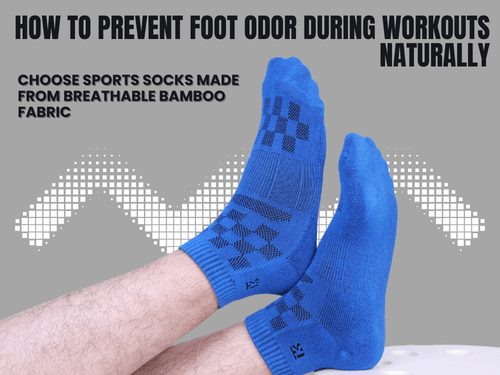
Product takeaway: Look for socks that combine a breathable fabric with airflow panels, cushioning and a fit that stays in place. Kikitoes uses bamboo fabric and ventilation-focused construction across its bamboo socks for men, including ankle and crew options for different shoes.
Why do feet sweat so much inside shoes?
Your feet sweat to help regulate temperature. Shoes create an enclosed space with limited airflow, while walking or exercise adds heat. Consequently, even clean socks can feel wet.
Hot weather, exercise, stress, hormonal changes, long hours on your feet and tight footwear can increase perspiration. Some people also have plantar hyperhidrosis, which means the soles sweat more than the body needs for cooling.
Sweat itself does not create the familiar smell. Instead, skin microbes break down components in perspiration and produce odorous compounds. According to the NHS, smelly feet, also called bromodosis, often result from a build-up of sweat and bacteria. Fungal infections such as athlete's foot can also cause or worsen the problem.
Therefore, interrupt the warm, damp cycle with better socks, dry footwear and consistent foot care. The supporting guide, Why Feet Sweat Even in Socks, explains the process.
Which sock features matter most for sweaty feet?
1. Moisture-wicking fabric
Moisture-wicking fabric draws liquid away from the skin and spreads it across a larger area. This process supports faster evaporation when the shoe allows airflow. As a result, your feet may feel less clammy, although the sock still absorbs some perspiration.
Do not judge a sock only by its fibre label. Blend, yarn, knit density and finish also affect performance. A well-designed blend balances softness, stretch, airflow and durability.
2. Breathable knit or mesh ventilation
Airflow helps heat and water vapour escape. Therefore, look for mesh panels over the instep or other sweat-prone zones, especially for long hours in closed shoes.
Kikitoes bamboo ankle socks use an airflow-mesh design and cushioning for gym, sports and everyday use. That combination addresses two common needs: ventilation and comfort under impact.
3. A stable, non-bunching fit
Loose fabric folds and rubs damp skin, while a tight cuff can leave marks. Choose the correct size, a shaped heel and enough stretch for stability without squeezing.
4. Appropriate cushioning
Cushioning reduces impact and rubbing. Nevertheless, very thick socks may retain heat inside snug shoes. Choose targeted padding around the heel and forefoot.
5. Smooth toe construction
A rough toe seam can rub moist skin. A smooth seam improves comfort, especially for people who blister easily. Anyone with diabetes, reduced sensation or circulation concerns should seek medical advice. Kikitoes offers diabetic socks with a non-binding cuff and smooth toe area.
Are bamboo socks good for sweaty feet?
Yes, bamboo-derived socks can work well when the fabric and knit manage moisture effectively. Most use regenerated cellulose called bamboo viscose or rayon. It usually feels smooth, absorbs moisture and supports comfortable wear.
A 2024 textile study in Materials compared viscose and lyocell socks with cotton socks made under controlled conditions. The researchers reported better moisture absorption and breathability for the viscose and lyocell socks, although they also found lower abrasion resistance. This evidence supports a balanced conclusion: cellulosic socks can offer strong comfort properties, but reinforcement and overall construction still matter. See the peer-reviewed sock-quality study.
Key bamboo socks benefits for hot weather
-
Soft hand feel: Smooth fabric can feel comfortable during long working days and commutes.
-
Moisture absorption: The material can take up perspiration and reduce the wet feeling against the skin.
-
Breathable comfort: A suitable knit allows air and water vapour to move through the sock.
-
Temperature comfort: Moisture movement and ventilation can make enclosed shoes feel less stuffy.
-
Lower-friction feel: Soft yarn and a secure fit can reduce rubbing, although shoe fit remains equally important.
Still, “bamboo” is not a performance guarantee. Check ventilation, cushioning, reinforcement, fit and care instructions. Moreover, antibacterial or anti-odour performance depends on the finished product and its testing; the fibre label alone does not prove it kills microbes.
Are cotton socks suitable for sweaty feet?
Cotton feels breathable and can work for light use. The NHS includes natural fabrics such as cotton in its self-care advice. However, standard cotton may stay damp inside closed shoes, especially during exercise or humid weather.
Therefore, compare the complete sock. A bamboo-viscose blend with mesh may suit a humid commute, while a fast-drying technical blend may suit intense running. Let your activity, shoes and sweat level guide you.
Which sock type should you wear for each activity?
| Activity | Best sock features | Useful internal option |
|---|---|---|
| Office and formal shoes | Breathable crew length, smooth toe, secure cuff, moderate cushioning | Bamboo crew socks |
| Gym and strength training | Mesh ventilation, targeted cushioning, snug heel, low-bulk fit | Sports and ankle socks |
| Running or brisk walking | Fast moisture movement, secure fit, reinforced heel and toe | Anti-odour ankle socks |
| Travel and long commutes | Soft fabric, breathability, odour-control design, spare pair | Sock combo packs |
| Sensitive feet | Smooth toe, non-binding cuff, careful sizing and daily skin checks | Diabetic socks |
For Delhi summers, Mumbai monsoons or humid days in Chennai and Kolkata, breathable footwear matters alongside the sock. Even excellent moisture-wicking socks struggle inside a tight, non-breathable shoe.
How can you stop socks and shoes from smelling?
Start with a routine rather than relying on one product.
-
Wash your feet daily. Clean between the toes, then dry the skin completely.
-
Wear a fresh pair every day. Change again after a workout or whenever the socks become wet.
-
Rotate your shoes. Avoid wearing the same closed pair on consecutive days when possible, so the lining can dry.
-
Use moisture-absorbing foot powder if suitable. A pharmacist can help you choose an appropriate product.
-
Choose shoes with adequate space and airflow. Tight, non-breathable shoes trap more heat and moisture.
-
Wash socks according to the care label. Perspiration, skin oils and microbes remain in poorly washed fabric.
-
Carry a spare pair. This simple step makes a major difference during travel, long shifts and monsoon days.
The AAD also recommends frequent changes and moisture-absorbing insoles or powder when needed. Socks form one part of the solution.
How do Kikitoes socks address sweaty-foot discomfort?
Kikitoes designs its range for hot and humid Indian conditions. Sports styles combine bamboo fabric with airflow mesh, cushioning and stretch, while crew styles cover office and formal needs.
Start with the length that matches your footwear: ankle socks for trainers and crew socks for office shoes. Assess comfort after a full day, drying time and fit stability. You can buy socks online by activity, length and design.
When should sweaty feet concern you?
Perspiration in heat or exercise is normal. However, seek medical advice if sweating starts suddenly, occurs without a trigger, disrupts daily life or resists self-care. Also act on persistent itching, peeling, cracks, pain, colour changes, wounds or continuing odour.
People with diabetes should not ignore blisters, cuts or skin changes. Socks can improve comfort, but they cannot diagnose or treat hyperhidrosis, athlete's foot or a bacterial infection.
Frequently asked questions
What material is best for sweaty feet?
No single material wins in every situation. Bamboo-derived viscose offers softness, moisture absorption and breathable comfort. Performance synthetics may dry faster during intense sport, while suitable wool blends can manage moisture in varied temperatures. Always consider fabric construction and fit.
Do anti-odour socks stop sweating?
No. Anti-odour socks do not switch off sweat glands. They aim to manage moisture or reduce the conditions that allow odour to build. If you sweat excessively, seek advice about hyperhidrosis.
Should I wear thick or thin socks for sweaty feet?
Choose enough cushioning for your activity without overcrowding the shoe. A moderately cushioned, ventilated sock often provides a better balance than an extremely thick pair.
How often should I change socks if my feet sweat heavily?
Change them at least daily and whenever they become wet. The NHS advises people with hyperhidrosis to change socks at least twice a day.
Can sweaty feet cause athlete's foot?
Moisture does not automatically cause a fungal infection. However, fungi thrive in warm, damp environments. Keeping feet, socks and shoes dry can reduce that favourable environment.
Final answer
The best socks for sweaty feet combine moisture-wicking fabric, breathable construction, a stable fit and activity-appropriate cushioning. Bamboo-derived socks can provide an especially soft and comfortable option for daily wear in India's hot or humid conditions. Nevertheless, fibre choice works best alongside clean, dry feet and properly aired footwear.
Choose the pair for the job, change it when wet, and judge performance after a complete day, not from the fibre label alone. That practical approach helps feet feel drier, reduces odour build-up and makes long hours in shoes far more comfortable.